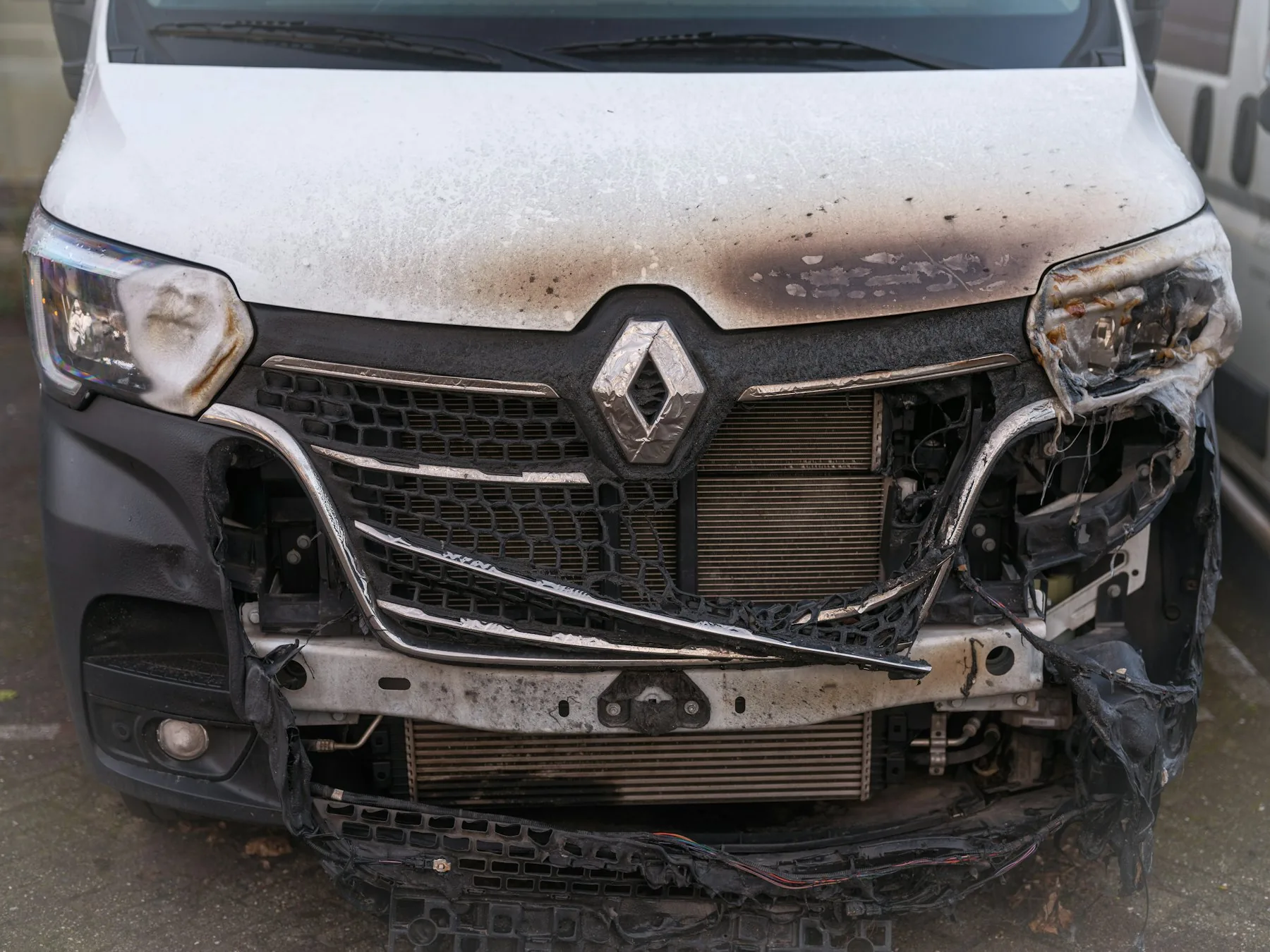
A Cat N car you have repaired can usually go back on the road once it has a valid MOT, tax and insurance. A Cat S car can add DVLA paperwork, and in every case you should tell your insurer about the write-off. Do the paperwork sums before you bid, because they decide how long the car sits unsold.
This guide covers the steps after the hammer falls. It uses GOV.UK guidance throughout. It is for UK buyers; MOT rules differ in Northern Ireland.
What the category means for getting back on the road
GOV.UK sets out the write-off categories in its guidance on insurance write-offs. Only two can return to the road.
| Category | Repairable? | Back on the road? |
|---|---|---|
| A | No | Whole vehicle must be crushed |
| B | No | Body shell must be crushed; other parts can be salvaged |
| S | Yes, after structural damage | Yes, once repaired to a roadworthy condition |
| N | Yes, after non-structural damage | Yes, once repaired to a roadworthy condition |
GOV.UK calls S and N "constructive losses": the car could be repaired, but the repair would cost more than the replacement value. Cat A and B cars "will not be re-registered by DVLA" and should never be repaired and driven.
For the resale effect of each category, see our Cat S vs Cat N guide.
The order to do things in
- Get an insurance quote before you bid. GOV.UK's consumer guide to repaired written-off vehicles says to contact your insurer before buying, because a cheap car can be cancelled out by a much higher premium. It also warns that not every insurer will cover a previously written-off vehicle.
- Collect the car and keep every receipt. Your repair evidence matters for the next step and for the next buyer.
- Sort the log book (V5C). See the next section.
- Check the MOT. See below.
- Insure and tax it before it moves, and tell the insurer it is a previous write-off. GOV.UK's buy a vehicle checklist says you need insurance before using the vehicle on the road, and you must tax it before you use it. The consumer guide adds that if you do not disclose the write-off, your insurer can reject a claim for non-disclosure.
Does Cat S or Cat N show on the V5C?
GOV.UK says that for a Cat S vehicle, DVLA records the category in the log book. Its owner-side route is to send the complete log book to the insurer and apply for a free duplicate log book using form V62. For Cat N, the owner can keep the existing log book.
That description is written for the person whose own car was written off and who is keeping it. A lot you buy at auction may have a different paperwork path, depending on what the seller has already done and what the listing says about the log book. Do not assume. Read the lot's notes, and ask DVLA how to register the car in your name before you bid on anything where the log book is missing or marked pending.
If you end up without a V5C, GOV.UK lists a replacement log book at £25, and DVLA may inspect the vehicle to confirm its identity. It says there is no fee for that inspection. Budget the time as well as the money.
Before you commit, GOV.UK's consumer guide also says to check that the VIN on the car matches the V5C and DVLA's records using the vehicle enquiry service.
What about the MOT?
The question people ask is whether a repaired Cat S or Cat N car needs a new MOT. The GOV.UK MOT rules do not make an exception for write-offs. An MOT is due by the third anniversary of registration, or the anniversary of the last test. If the MOT has run out, you cannot drive or park the car on the road. You can be fined up to £1,000.
The only exceptions are driving it to or from a repair, or to a pre-arranged test. Plan for that: book the test before you move the car.
Look up the car's record on GOV.UK's MOT history service. It shows pass and fail results, recorded mileage, and what failed at each test. For a car over three years old, GOV.UK's consumer guide suggests it as a check that the car was roadworthy before the loss. Do not treat a valid MOT as proof of a sound repair. For that, GOV.UK recommends an independent engineer's report. If a lot has no usable MOT record, expect the test to be the first real check of your repair.
Worked example: where the paperwork changes the bid
These figures are an illustration, not a quote. Suppose a clean-title version of the car is worth £8,000. Our Cat S vs Cat N guide gives typical resale haircuts of 15% to 25% for Cat N and 25% to 40% for Cat S.
| Cat N | Cat S | |
|---|---|---|
| Clean-title value | £8,000 | £8,000 |
| Typical haircut | 15% to 25% | 25% to 40% |
| Likely resale range | £6,000 to £6,800 | £4,800 to £6,000 |
Now take the cost side. On a £2,000 hammer, our buyer fees guide puts Copart UK fees at £304.80 including VAT, so £2,304.80 before transport and storage. Then add what only you know: repair parts and labour, the MOT, and any days the car sits off the road while paperwork clears.
A simple decision rule for the paperwork:
- Reselling within weeks: the insurance premium is your buyer's problem, and it should already show up in the haircut you price in. Your own cost is time. Every week of waiting for DVLA is a week of capital tied up.
- Keeping the car: get the quote first. Multiply the gap between a clean-title quote and a write-off quote by the years you will keep it, and take that off your max bid.
- Log book missing or unclear: treat it as a walk-away signal unless the discount is big enough to pay for the delay and the risk.
CarMargin AI builds the category haircut, fees, transport and repair estimate into a max bid on the lot page, so you can see whether the maths survives before the paperwork starts. Our repair plan breaks the repair into parts and labour. Plans start at £19 a month, with a 7-day free trial. We are independent and not affiliated with Copart UK.
Checklist before you bid
- Insurance quote in hand for a previous write-off, from an insurer that will cover it.
- Declared category matches the damage in the photos. See the Cat S vs Cat N guide if the photos suggest structural damage on a Cat N.
- Log book status read from the listing notes, and a plan if it is missing.
- MOT history checked on GOV.UK, and a test booked for collection day if needed.
- Budget for the V5C replacement (£25) if you need one, plus repair, transport and your time.
- An independent engineer lined up for a structural repair, as GOV.UK advises.